
The Lambayeque
The Gold CultureThe Lambayeque Civilization
The Lambayeque Culture had its main center in the Lambayeque region; however, its territory extended from the Chicama Valley to the Piura area. Its development period began with the decline of the Moche culture and ended with the conquest by the Chimus around 1350. The Sican Archaeological Project, under the direction of the Japanese archaeologist Izumi Shimada, has divided the development of the Lambayeque or Sican culture into the following periods:
-
Early Sican: 700 A.D. – 900 A.D.
-
Middle Sican: 900 A.D. – 1100 A.D.
-
Late Sican: 1100 A.D. – 1375 A.D.
During the early years, the Lambayeque people did not have a capital. However, Huaca Chotuna is considered an important religious center. According to the legend of Naylamp, this may have been the place where the idol Yampallec (a figure or statue of Naylamp) was placed. The first major capital was Batan Grande, located in the La Leche Valley. This site has been studied since 1978 by Izumi Shimada. The second capital was Tucume, a ceremonial center composed by 26 pyramids built entirely in adobe. During this period, the Chimus conquered the region; however, this did not lead to the abandonment of Tucume. On the contrary, it retained its prestige and function until the arrival of the Spanish.
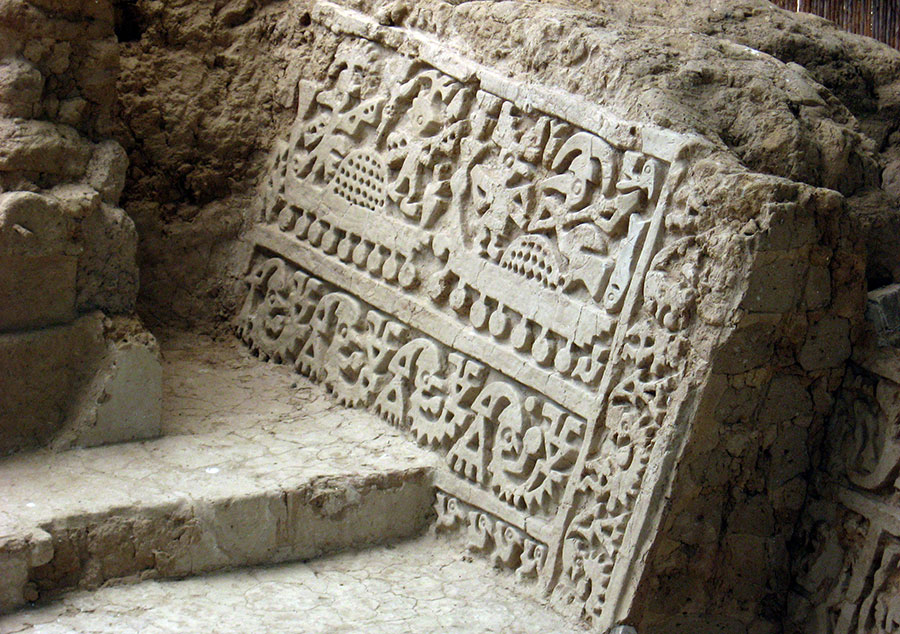
METALLURGY
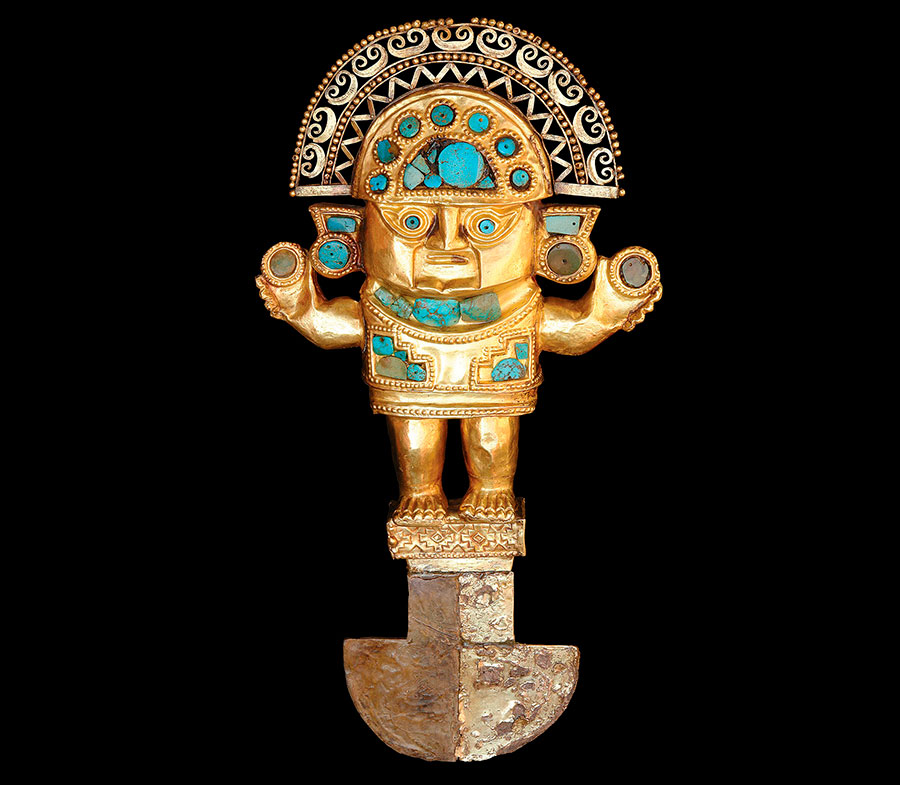
The lambayeques were great master goldsmiths, inheriting the techniques of their Moche predecessors. It is estimated that 90% of the gold artifacts in the Gold Museum of Peru in Lima come from the Lambayeque region. In addition to working with gold, silver, and copper, they also used emeralds, turquoise, amber, and marine shells such as spondylus, strombus, and conus.
The most iconic symbol of Peruvian metalwork is the “tumi” or ceremonial knife. The most famous tumi was found by looters in 1937 at Huaca Las Ventanas, Batan Grande. This knife was acquired by the National Museum of Archaeology and Anthropology, from which it was later stolen and partially destroyed in 1981.
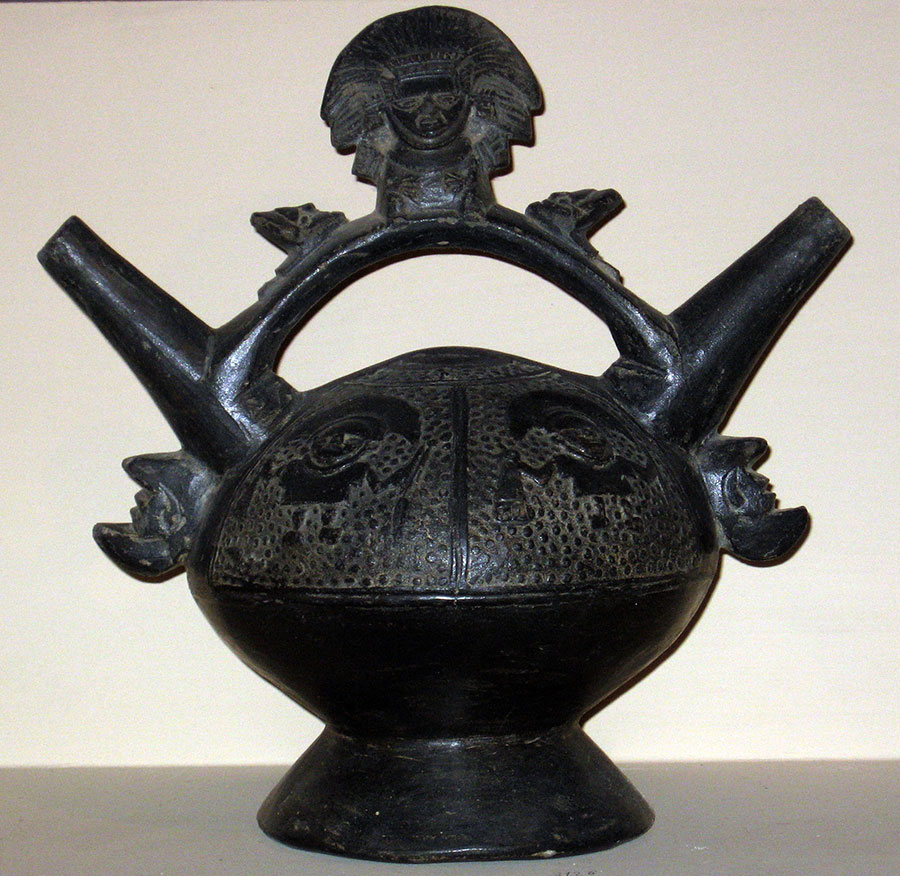
CERAMIC
Lambayeque ceramic was not as artistic as those of the Moche. They used molds and preferred red and gray colors. There are two classic types: one is spherical in shape and features a representation of Naylamp at the top, ending in a conical spout; it is known as the “Huaco Rey” (King Vessel). The other type is globular with a double conical spout, connected by a bridge handle.
At Batan Grande, Izumi Shimada found numerous ceramic pieces covered with a metallic layer of tumbaga (an alloy of copper and gold, or silver and gold).
Recent Posts

El Brujo and the Lady of Cao
El Brujo and the...
Sipan Royal Tombs Museum
The Sipan Royal...

Cumbemayo Aqueduct
It is located 20...
0 Comments