
The Chachapoyas
The Kingdom of the CloudsThe Chachapoyas Kingdom
The Chachapoyas were composed of different ethnic groups. Spanish conquistadors described them as brave and warrior-like people. Their women were famous for being beautiful and fair-skinned. The Incas relocated many young Chachapoyas women to Cusco to serve as concubines for the nobles. Peter Lerche (1986) estimates the population of this culture at 300,000 inhabitants at the time of the Spanish arrival.
EXTENSION
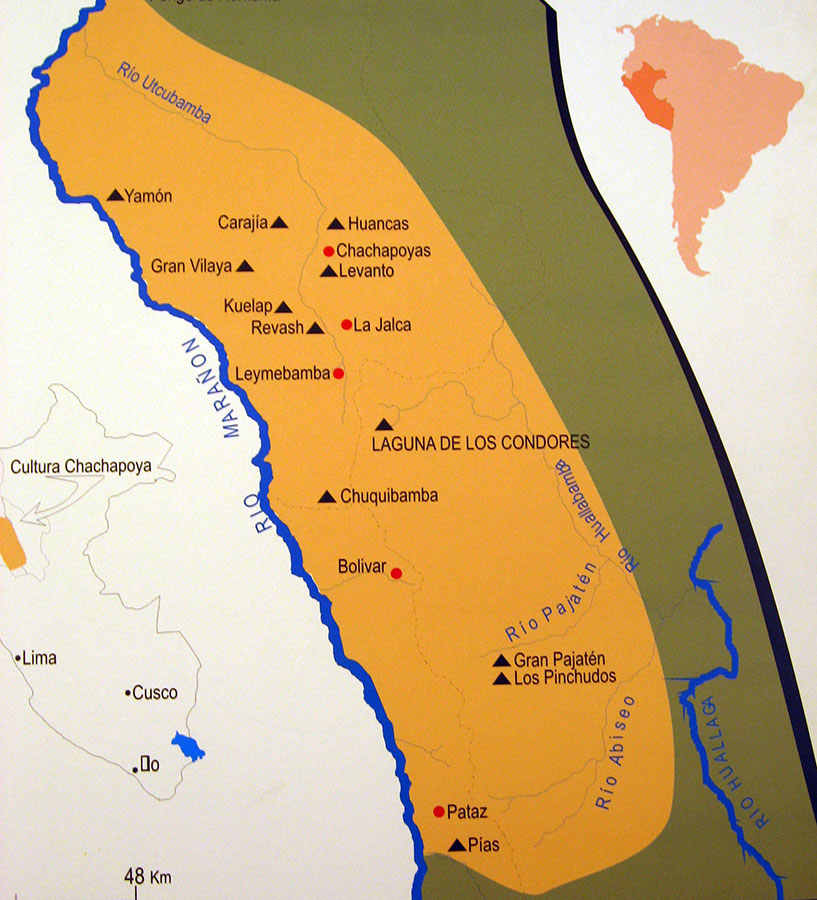
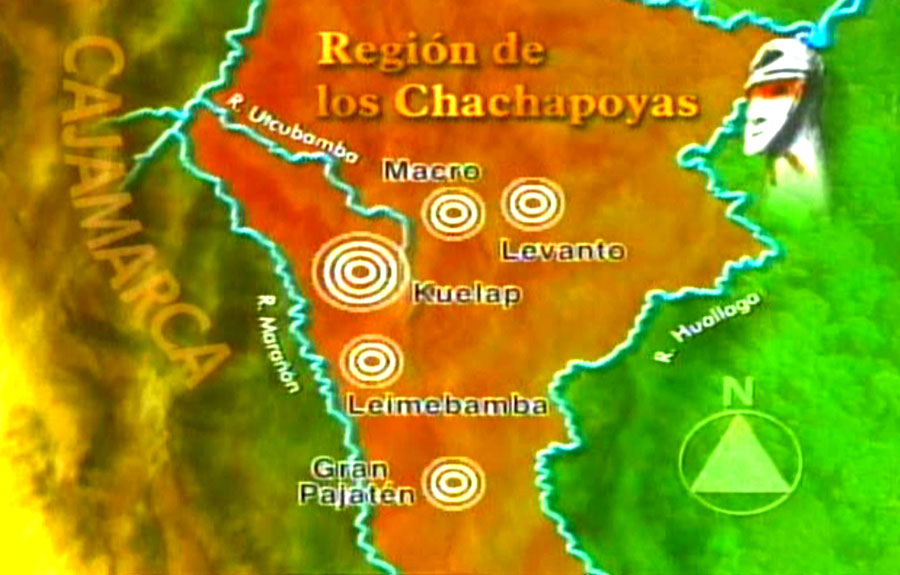
The Chachapoyas territory was located between 2,000 and 3,000 meters above sea level. Its area of expansion covered a vast territory, between the Marañón and Huallaga rivers. From north to south, they occupied about 300 km. The main part corresponded to the Utcubamba river basin up to the vicinity of Bagua, where it joins the Marañón.
CHRONOLOGY
There is no evidence of any previous dominant culture before the Chachapoyas. Federico Kauffman Doig argues that the origin of the Chachapoyas had its roots in the Tiahuanaco-Wari culture around the 7th century AD. This likely occurred due to the need to expand agricultural lands. There was a major migration towards the northern Amazonian Andes during that period.
ART
In their textile work, they primarily used cotton and, to a lesser extent, llama and alpaca wool. The waist loom was the most commonly used tool. In the Laguna de los Cóndores, high-quality textiles have been found, which were used to wrap mummies during the Inca period. The ceramics, however, were not of the same quality as those of other cultures.
ARCHITECTURE
Typical of their construction were the chulpas, which are characteristic of the highlands (Wari). It is assumed that the Chachapoyas’ main roots originated in the Tiahuanaco-Wari period around the 7th century, and that these were the work of Andean migrants who had to settle in the northern Amazonian Andes in a planned manner to expand their agricultural frontiers. The main sites include: Kuelap, Gran Pajatén, Vira Vira, Olán, Gran Vilaya, and La Congona. Another studied site is the Gran Saposoa, which is believed to be the ancient city of Cajamarquilla, conquered by Túpac Inca Yupanqui in 1470.
RELIGION
There is insufficient evidence to determine the main gods. Inca Garcilazo de la Vega claimed that their gods were the condor and the serpent. However, there are no architectural representations in Chachapoyas culture to confirm this view.
Regarding the cult of the dead, they respected the memory of their ancestors. The most important tombs were constructed on cliffs and difficult-to-access sites. The Chachapoyas did not mummify their dead. Instead, they wrapped the remains in ropes and textiles and placed them in reed baskets. The Inca implemented the mummification system in this region.
Two types of cemeteries have been identified:
Sarcophagi:
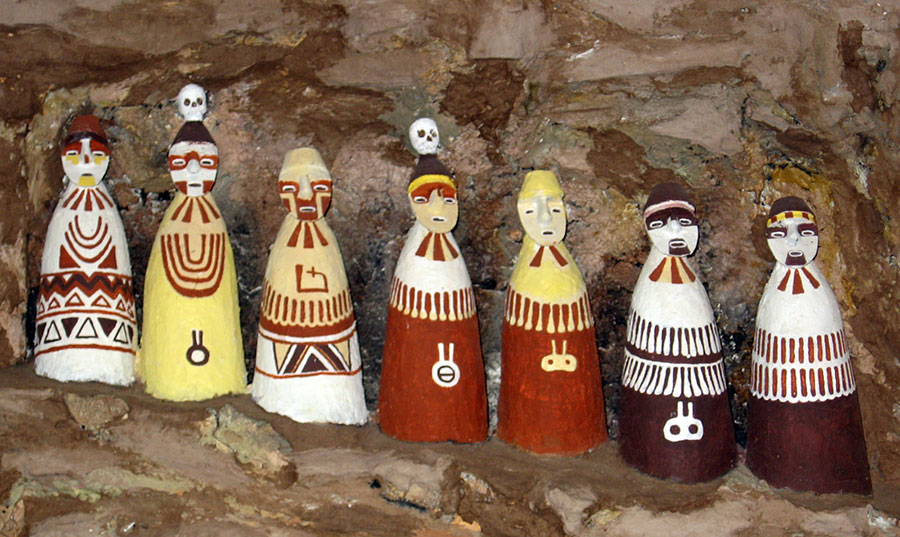
These were made of cane and clay. Inside, the remains of a single person were placed. The main site for this type is Karajía. Other sites include: Solmal, Chipurik, Lic, San Antonio, Tingorbamba, Tosán, and Pueblo de los Muertos.
Mausoleums:
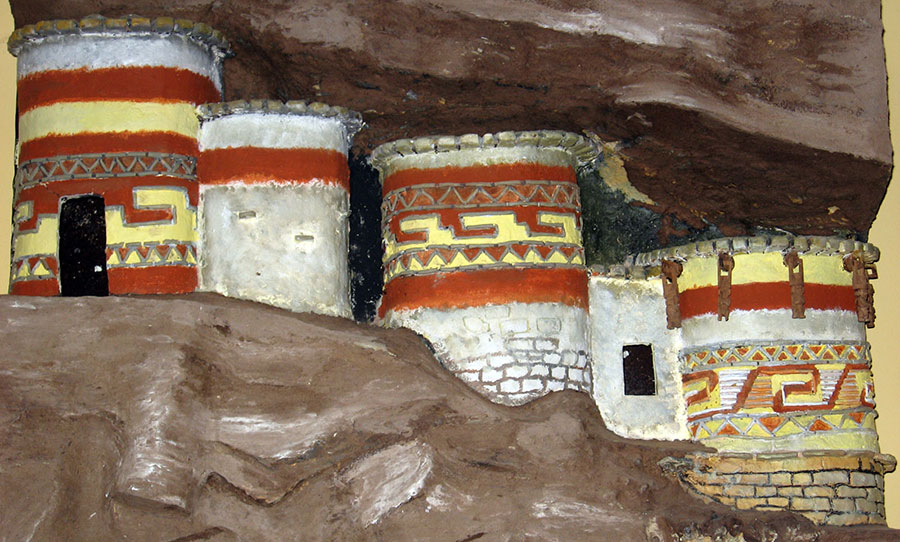
These tombs were shaped like houses. They were built with small stones and clay. Their external walls were painted. Typically, their roofs were pitched. The archaeologist Federico Kauffman Doig suggests that these cemeteries imitated the model of peasant houses. Notable mausoleums include those of Revash and Laguna de los Cóndores. Other sites are: Los Pinchudos, Ochín, Pueblo de los Muertos, Guanglic, and La Petaca – Diablohuasi.
THE CONQUEST OF THE CHACHAPOYAS
Around 1470, the Inca army, led by Tupac Yupanqui, began their conquest of this region. They entered through the Pías area (Bolívar), Kuntur Marca, Cajamarquilla (Bolívar Province), Papamarca, and Raymipampa (Leymebamba), where they celebrated the conquest of the Chachapoyas. The Incas built roads, extending the Inca trail from Cochabamba to Levanto.
During the reign of Inca Huayna Capac (around 1500), a large-scale rebellion took place. The Inca was in Cañaris on his way to Quito. However, to restore peace in the region, Huayna Capac sent messengers to the area. This effort failed, as the messengers were beaten and expelled. It was then that the Inca decided to personally handle the uprising and severely punish the rebels.
The Chachapoyas realized too late that their fate was death. However, they found hope in changing their destiny. They sought the help of a highly respected woman from the town of Cajamarquilla. This noblewoman had been one of Tupac Yupanqui’s concubines and was greatly revered in the region. She decided to intervene and plead for forgiveness before the Inca. She went with a group of women, determined to prevent the destruction of her people. With supplications and tears, she asked Huayna Capac not to spill the blood of her brothers, as she had brothers by blood, sons of his father Tupac Yupanqui. The Inca listened carefully to this matron’s pleas and, respecting her father, decided to pardon the rebels.
Recent Posts

El Brujo and the Lady of Cao
El Brujo and the...

Sipan Royal Tombs Museum
The Sipan Royal...

Cumbemayo Aqueduct
It is located 20...
0 Comments