
Chan Chan
Heritage World SiteChan Chan, the largest mud city in America
Chan Chan was the political and administrative capital of the Chimu Kingdom. Its original extension covered about 24 km2, nowadays the area has been reduced to 14 Km2. On November 28, 1986 , Chan Chan was declared “World Heritage” by UNESCO.
THE NAME:
The original name of the city is not known, and it’s difficult to say the name Chan Chan referred to the whole city.
The first chroniclers don’t indicate this name, instead they refer to the place like “The City of The Chimo” —name given to the valley — or Palaces of the Gran Chimu.
In 1791, the name Chan Chan appears for first time, in the magazine El Mercurio Peruano, like reference to this archaeological place.
The study of ancient documents indicates that the name Chan Chan, belonged to some saltpeter mine located on the way to Huanchaco, inside Chan Chan. The meaning of Chan Chan as a Muchic derivative of Jan Jan, Sun Sun, was brought up by Ernst Middendorf (1892).
In the opinion of Zevallos Quiñones, Chenchengo (1679) would had been the oldest antecedent of the actual denomination because in this area the language was the Quingñam.
POPULATION:
Estimates suggest that the population of the Chimu territory ranged between 20,000 and 30,000 inhabitants at its peak, according to archaeologist Kent Day.
The total population of the entire Chimu territory is believed to have reached approximately 500,000 people (John Rowe).Ernst Middendorf (1894) proposed that Chan Chan may have housed up to 100,000 residents. However, by the time of its abandonment the population had declined significantly, possibly ranging between 5,000 and 10,000 inhabitants (Kent Day).
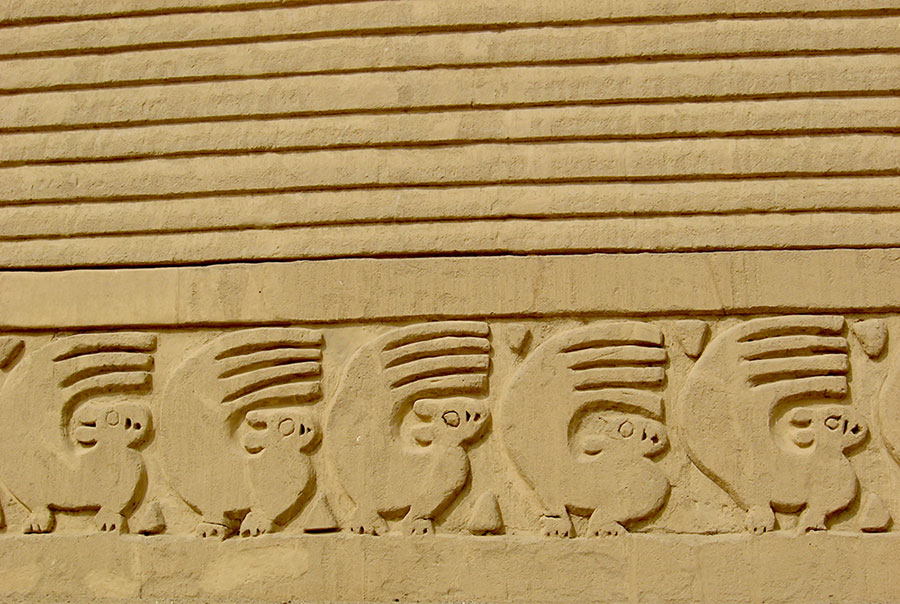
ARCHITECTURE:
It has been possible to recognize three architecture kinds:
Monumental architecture, referred to rectangular fences or citadels that were residence of the upper class and also to the huacas or temples.
Intermediate architecture, belongs to adobe constructions where the members of the low nobility and the local chiefs lived.
Popular architecture, is the most simple, associated to the constructions of cane and mud used by the artisans.
WALLED COMPOUNDS
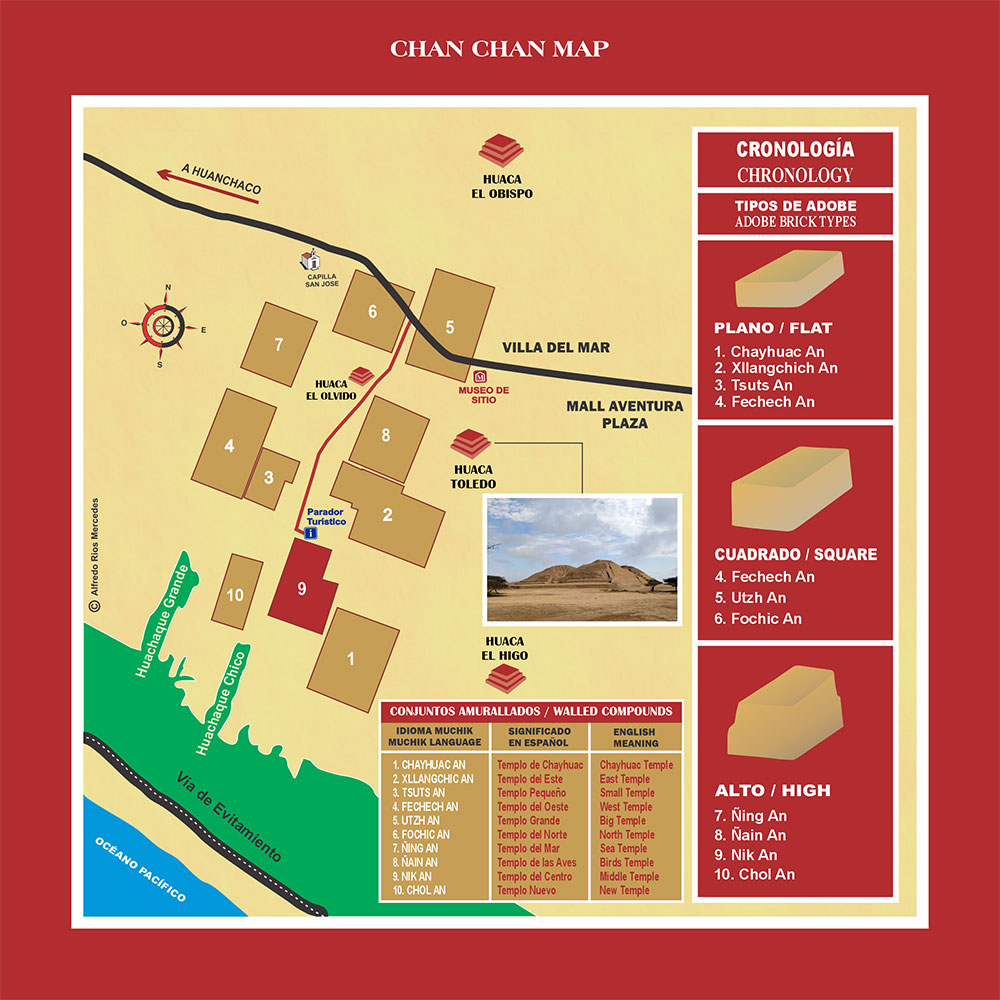
The city consists of 10 Walled Compounds which have been designated with new names from 2006.The citadels are distinguished from the other architecture at Chan Chan by their monumental scale, extreme control of access and formal complexity and elaboration.
Some years ago, the archaeologists considered that each Walled Compound was a palace but the researchers were not found evidences about a residencial or administrative function of this compounds. According to the last excavations this constructions were ceremonial centers and when the king died were used like mausoleums of the mummies.
CONSTRUCTION SEQUENCE
There is no agreement on researchers about the sequence of the construction. Some of them have proposed that all the city was built at the same time (Lanning 1967), however most have suggested a construction and sequential occupation for all the city.
Different studies have been done to determine the sequence, based on the architecture: U-shaped structures (Andrews 1972); funerary platforms (Pozorski 1971); (Conrad 1974); the form of the plan of the citadels (Day 1973) and type of adobe (Kolata 1978, 1982, 1990) which has been the most accepted and functional.
The sequence of construction of Chan Chan is possible to be summarized in three stages:
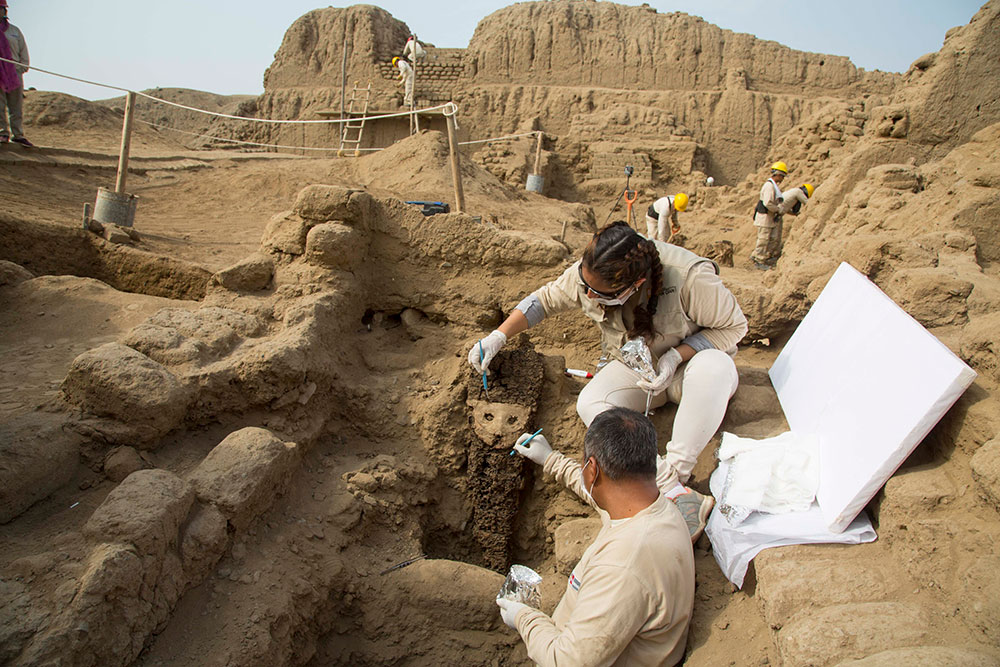
FIRST STAGE (850 – 1100 A.D.)
It begins with the construction of Huaca El Higo and Chayguac An compound which has the most simple internal organization, then, the compound Xllangchic An which presents a more complex planning with presence of administrative offices. This makes evident an economic movement based on the tributes.
SECOND STAGE (1125 – 1370 A.D.)
The size of the compounds is smaller, as well as the space for the storerooms. There is a reduction in the tributes. On the contrary, the officials and state administrators increased considerably, perhaps, with the purpose to obtain more tributes. However, it was difficult to support so many officials in a period of economic crisis. This weakened any resistance against the threat of the Incas.
THIRD STAGE (1370 – 1470 A.D.)
The compound Fechech An is built, this event formally established the structure of the Walled Compounds in three parts. It built the Utzh An, the biggest compound in Chan Chan, with spacious squares, numerous storerooms and annexes. This shows the centralization of the political and economic power.
During the construction of the last two walled compounds, Nik An and Chol An, substantial portions of the southern core of the ancient city were demolished to make way for the new structures. This reflects a shift in urban planning priorities and suggests that later Chimu rulers modified or replaced earlier constructions to assert their own authority and vision for the capital.
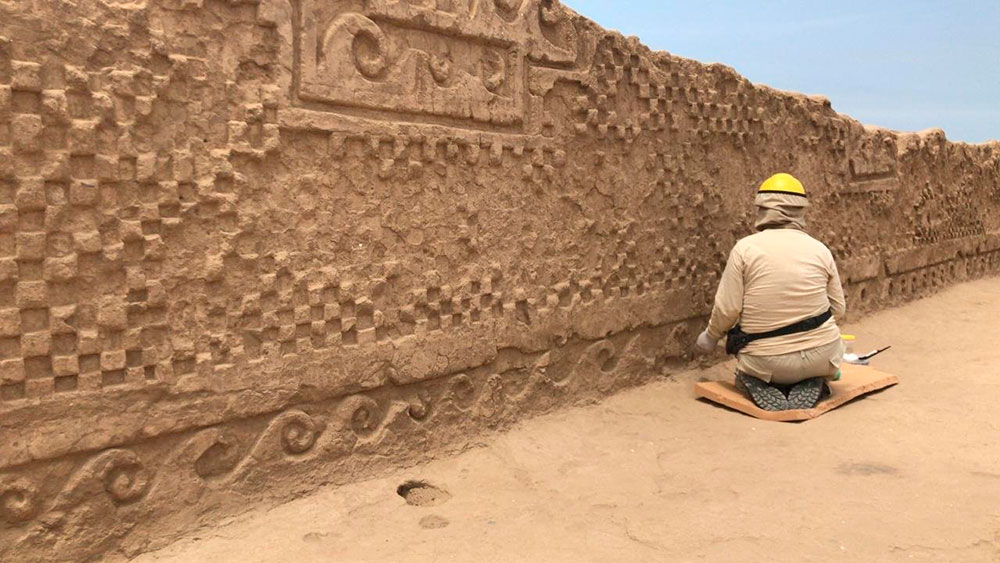
INHERITANCE
According to Geoffrey Conrad, a “dual inheritance” was established in Chan Chan. Upon the king’s death, his heir only received the political position, while the goods and rents passed to a group of their descendants. Therefore, each king had to build his own citadel, to live there with his closer relatives and to organize his own administration with new officials. To make wealth he had to conquer new territories.
The citadels were sacred places of funerary cult, occupied by a group of people who managed the rents of the deceased. According to the scholars, this modality should begin during the expansible Chimu time, because there are no evidences at the initial stage. The first citadels were possibly occupied by more than a king.
DECADENCE AND ABANDONMENT
When the Spanish arrived in 1534, the city was abandoned and it had lost its political importance.
When Huayna Cápac was in Quito he had to counteract a Chimu revolt in Chan Chan, which was repelled with strength. There is evidence that part of the city was set on fire, and the real family, headed by Huamanchumo moved on to the town of Mansiche.
Recent Posts

El Brujo and the Lady of Cao
El Brujo and the...
Sipan Royal Tombs Museum
The Sipan Royal...

Cumbemayo Aqueduct
It is located 20...
0 Comments